My Hot Take: Book the Gigs. But Don’t Stop Practicing
I’m long overdue for a post. And this one’s coming in scorching hot. 🔥
Happy Fall and everything. Now, let’s get into it…
There's an idea floating around the live event artist community that once you decide to pursue live events, you should stop spending so much time taking classes and learning new skills. Instead, you should laser-focus on securing the gigs and let the rest take care of itself.
And while I understand the sentiment, I have some thoughts. 👀
I don't believe building your business and building your skills should be an either/or proposition.
I absolutely agree that avoiding the business side of your business isn't going to get you very far. At some point, you're going to have to put yourself out there, get comfortable being uncomfortable, and tackle things like pitching and outreach.
Hello, introverts. 🙋🏾♀️
But I also firmly believe in the value of investing time in your craft. Not just when you're starting out, but throughout your career.
And I have a little story to explain why.
The Gig I Didn't Get (But I'm Glad I Almost Did)
Back in 2020, I started studying blackletter calligraphy.
And by started, I mean I learned the minuscules (lowercase letters) and bought myself some Pilot Parallel Pens. My focus at the time was on lettering and learning some vectoring. I did a project for my husband’s birthday and eventually moved on to other things.
Fast-forward to 2024.
I received an inquiry about lettering some certificates in blackletter. The problem? I'd never gotten around to learning the majuscules ( the uppercase letters).
Oops.
But I knew what it would take to learn them, and I quoted a price that reflected the time and effort I'd need to put into getting ready before the deadline.
I even asked my friend Abby if she thought I was crazy for considering it.
She didn't.
But Abby's about as crazy as I am, and everybody needs at least one friend like that in their corner. 😂
If you know anything about me, you know that when I agree to something I'm not quite 100% ready to do, TRUST, I'm going to put in the work to make sure I can deliver when the time comes.
In the end, I don't think the client cared much for my quote because I didn't get the job.
But you know what? By then, it didn't matter.
Because that inquiry had already sparked a renewed interest in blackletter.
And this time, it was all gas, no brakes.
One Notebook Turned Into Another...
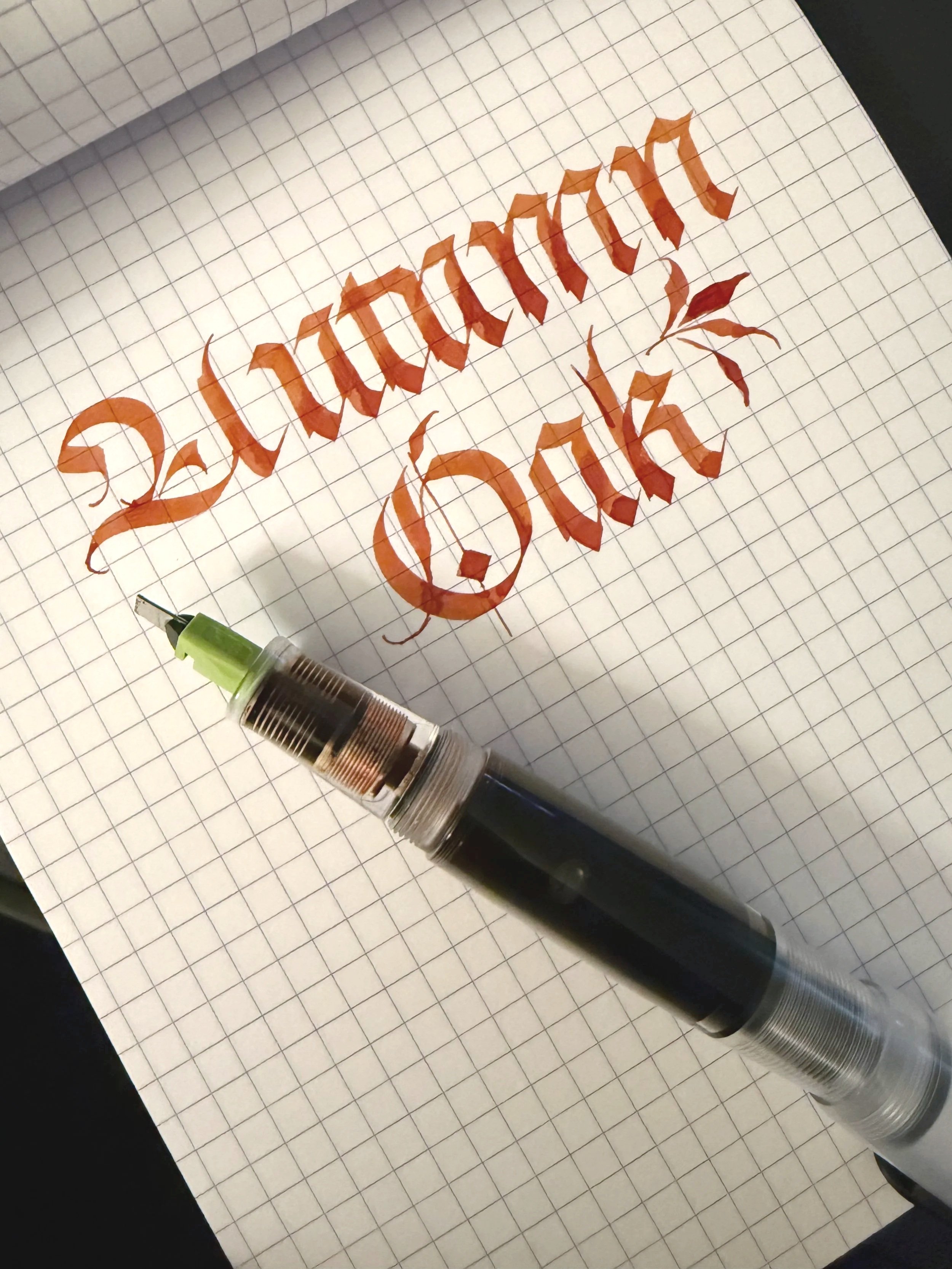
I dusted off those Pilot Parallel Pens from 2020 and started again.
And for the next couple of years, I found myself filling notebook after notebook with practice.
When I was still teaching, I'd sneak in some practice during my morning duty. These days, it's usually me, a few sheets of paper, and whatever I'm watching on Netflix. Mostly random words or whatever was crossing my mind at the time.
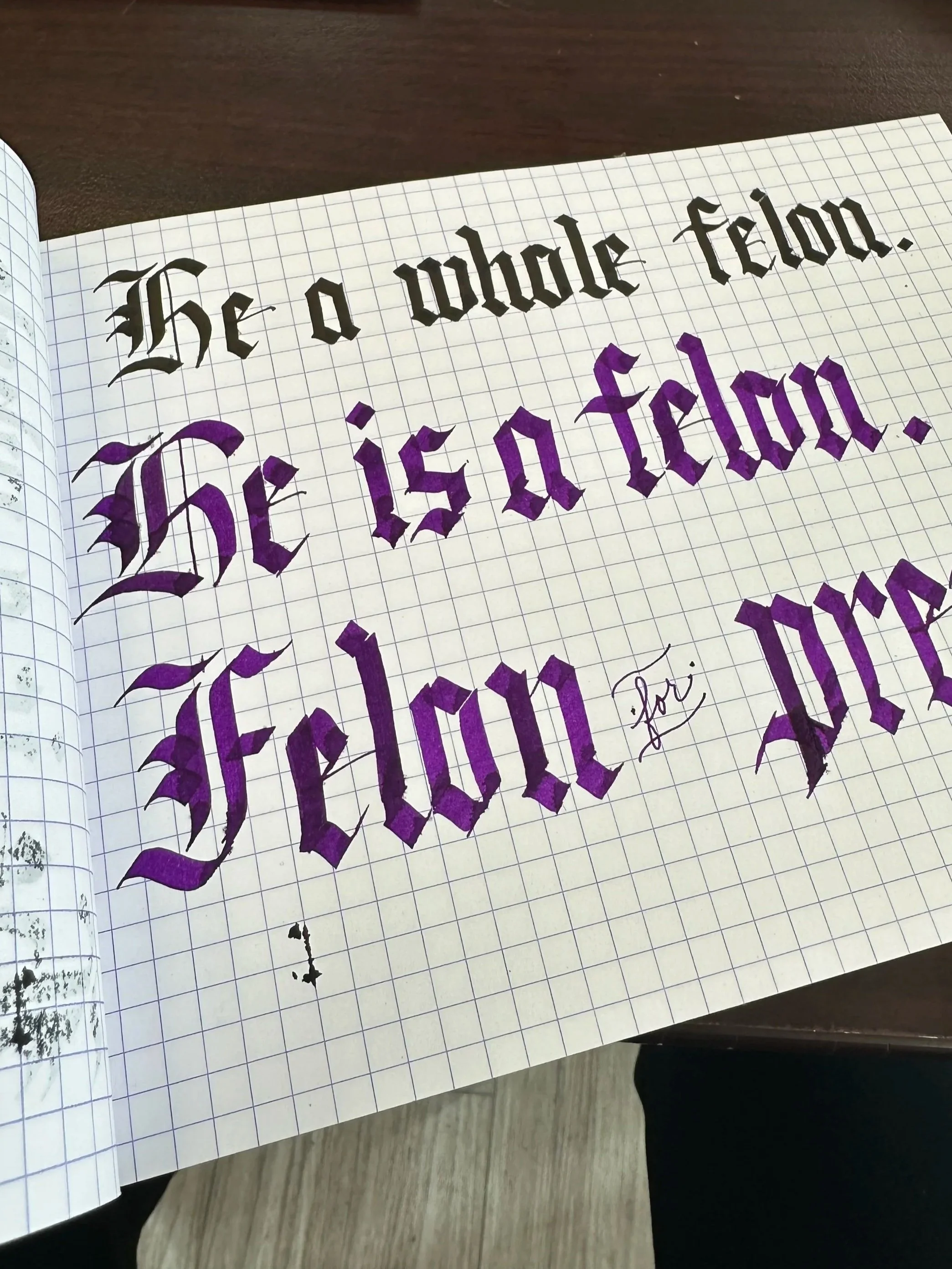
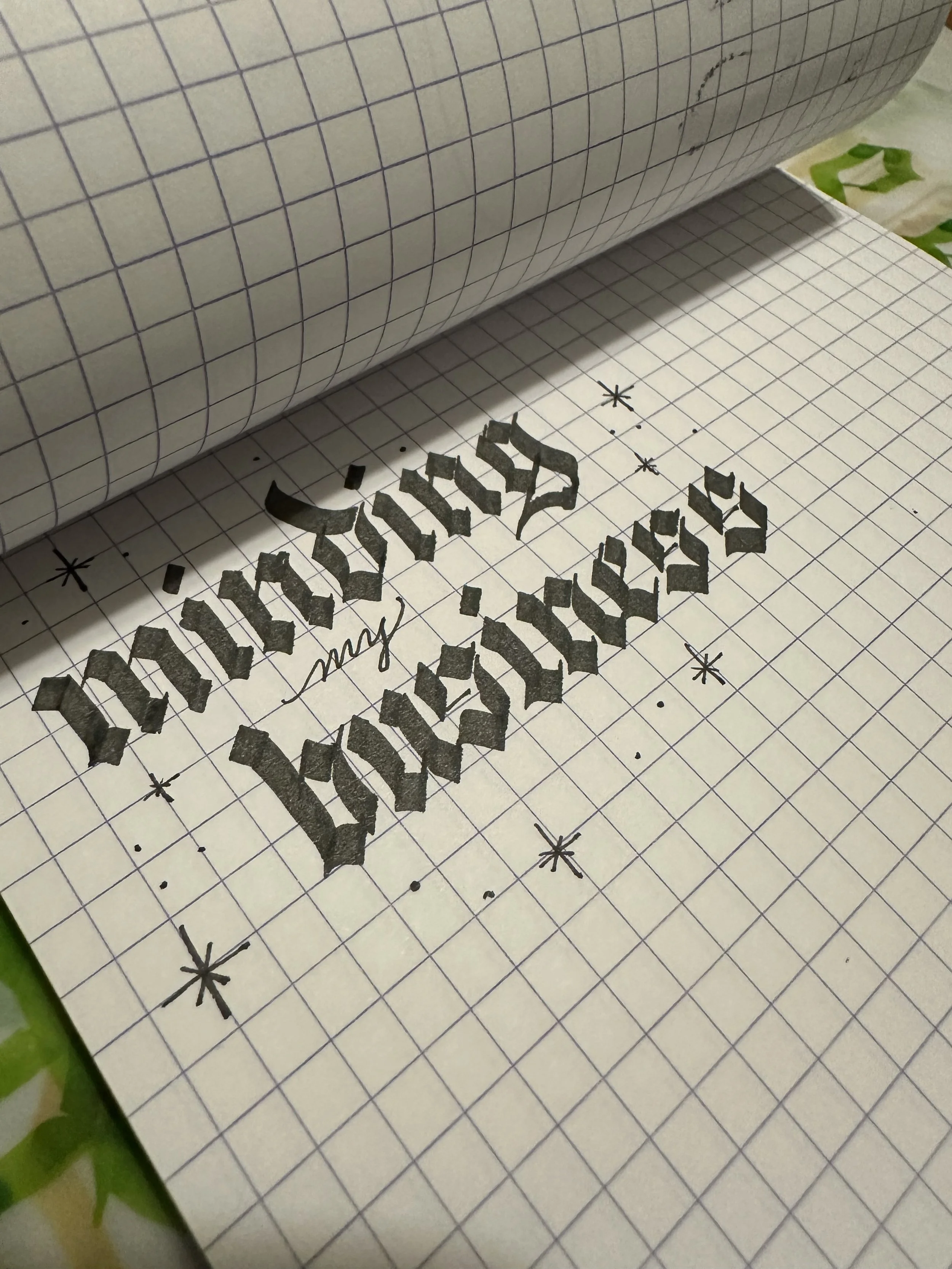
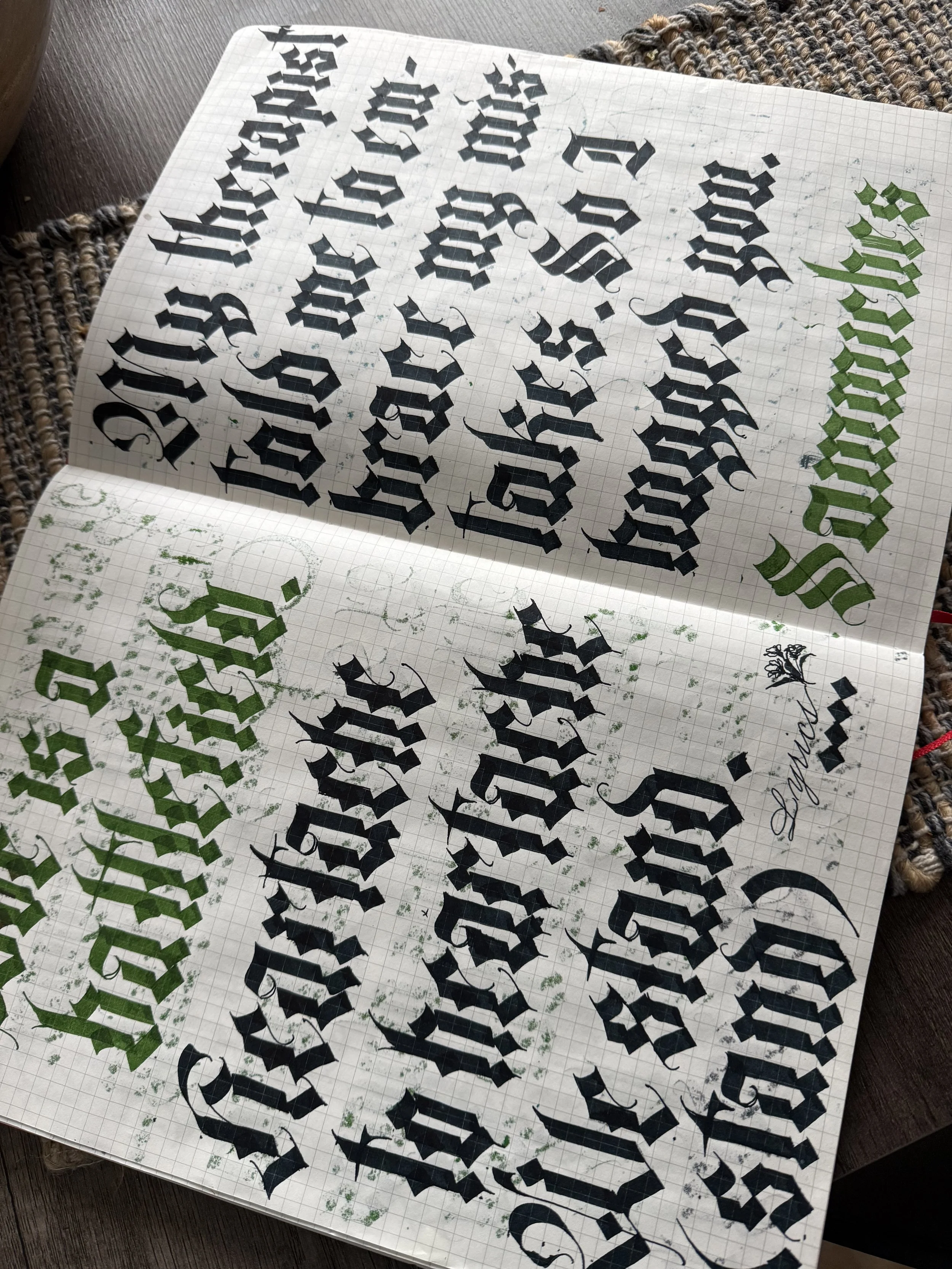
Some evenings, I practice for a while. Other nights, I fill a few sheets and call it a day.
Nothing particularly glamorous about it.
But little by little, the letters started making more sense.
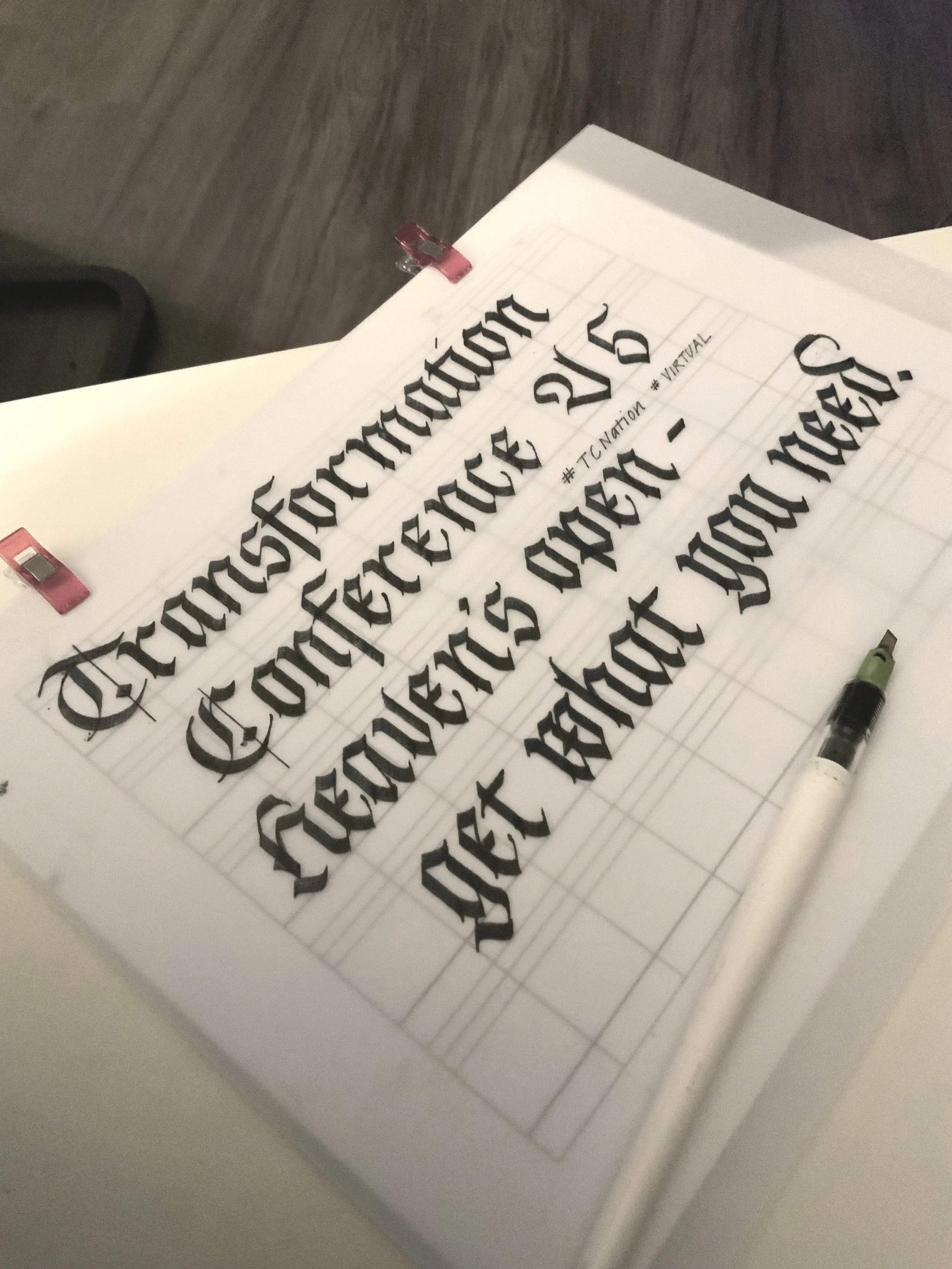
Along the way, I'd take a detour into Italic after accepting a job that called for another broad-edge script and an actual broad-edge dip pen.
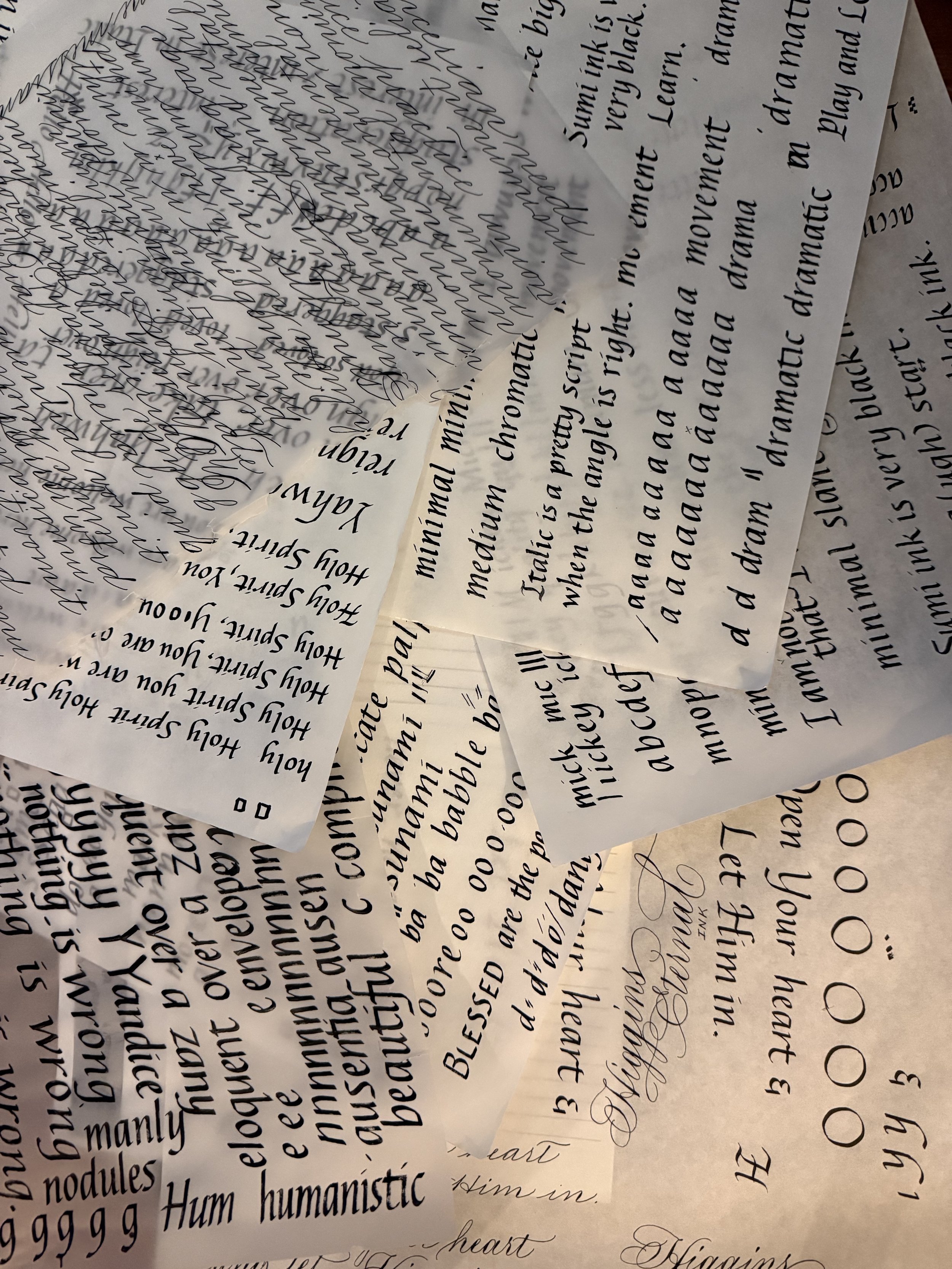
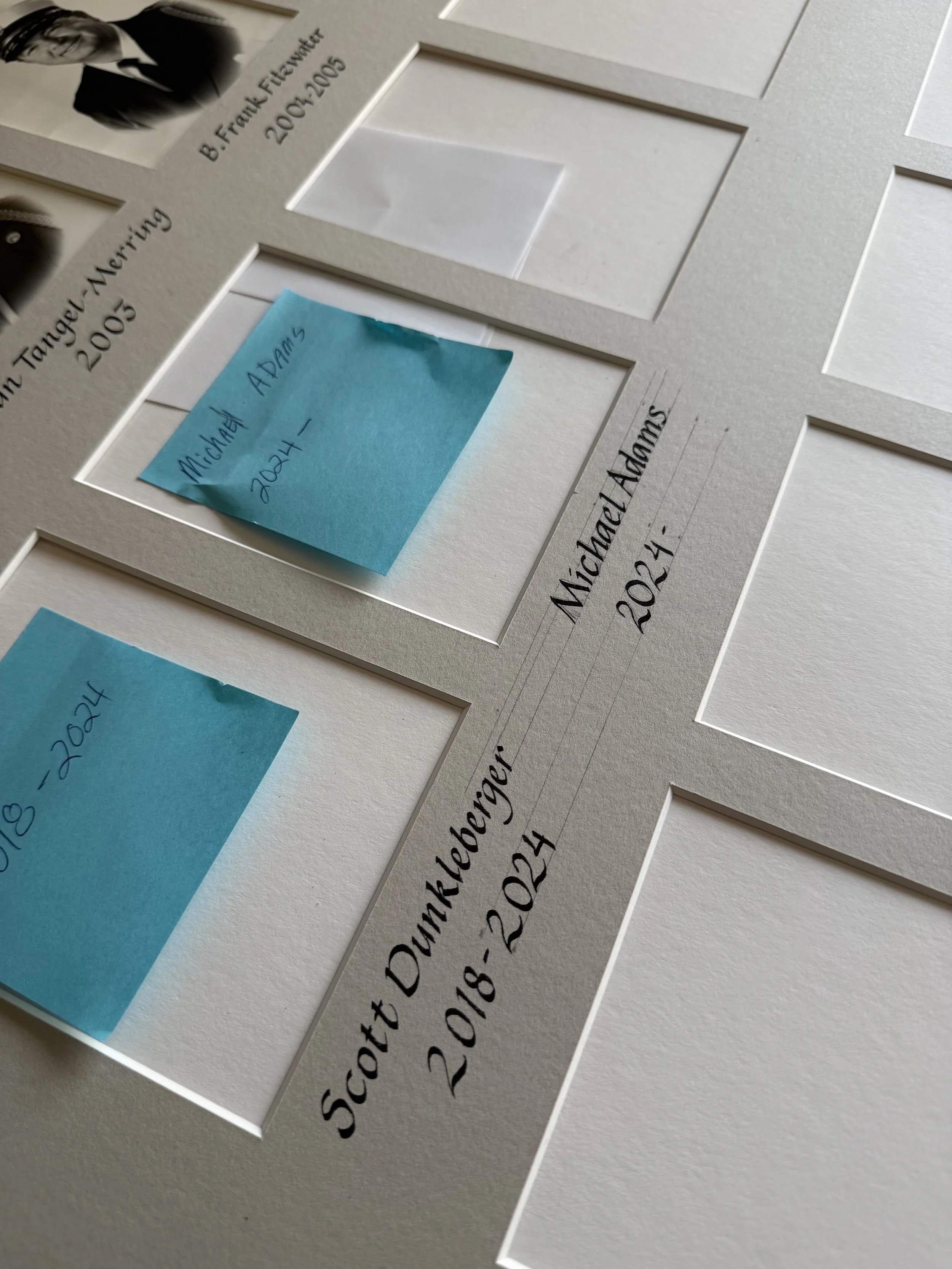
Recently, I paused to understand the whys behind the hows of worksheets I'd been studying (which you can find here, here and here) with an online class by the one and only, Nina Tran. I wasn't just interested in duplicating letters anymore. I wanted to understand why they worked so I could eventually make my own.

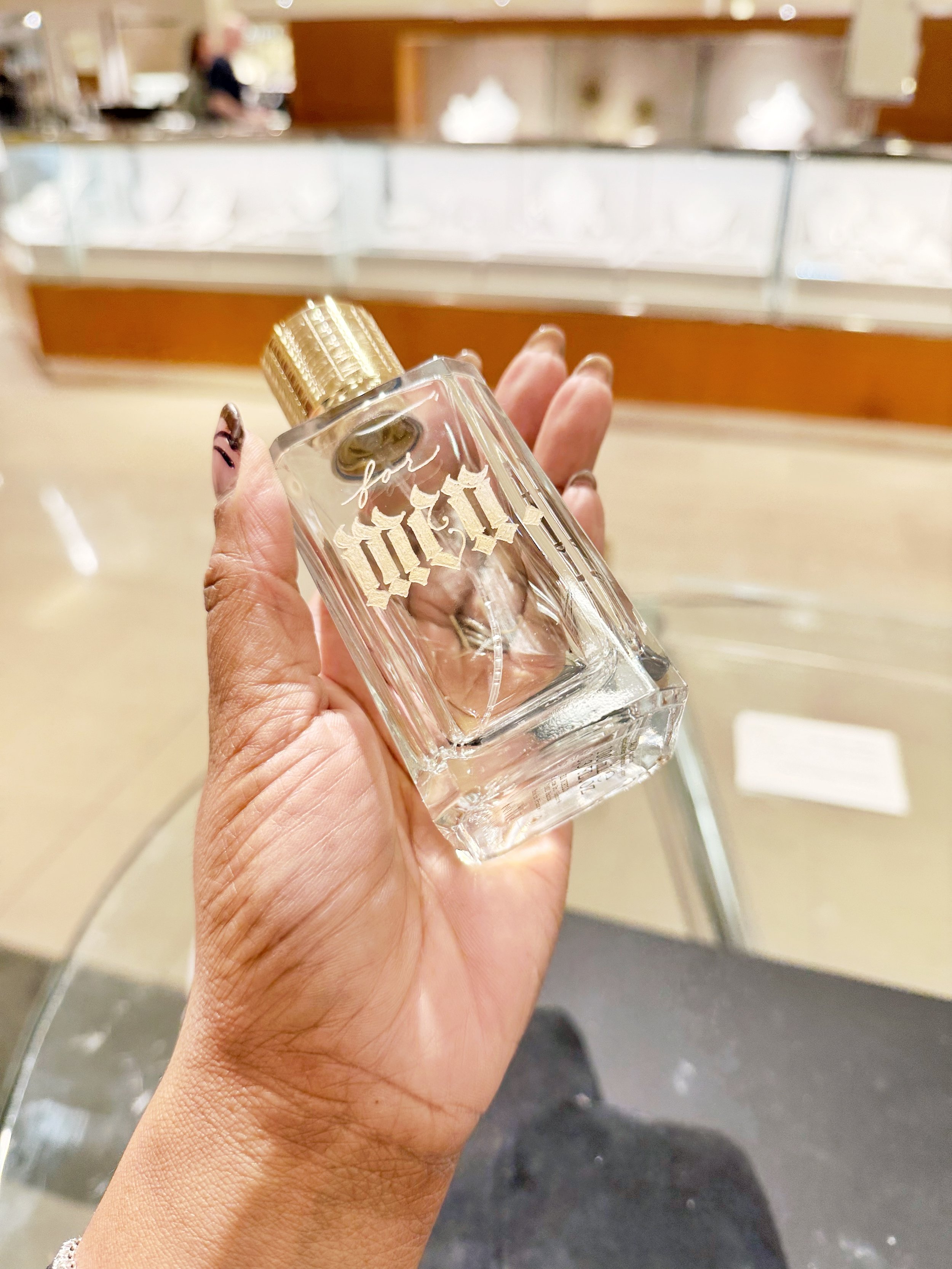
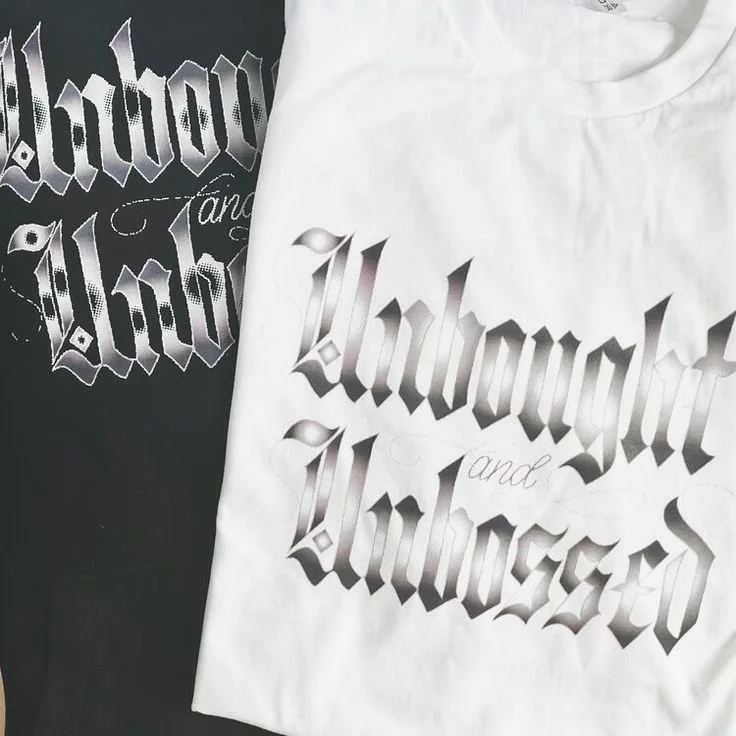
At some point in my journey, I felt confident enough to start experimenting with those scripts once in a while for gigs (see above).
Then, I started using what I had learned on tumblers for students and family.
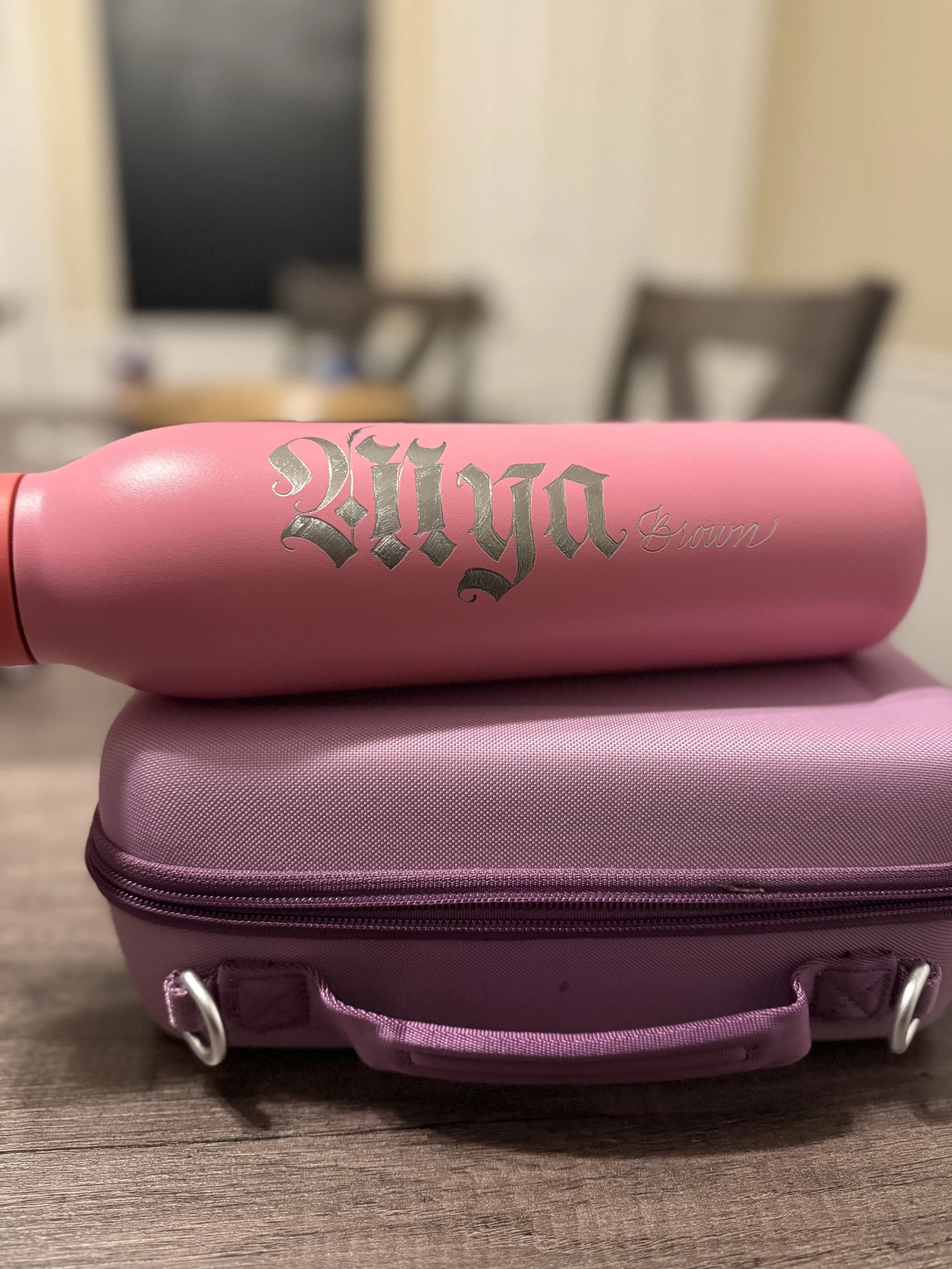
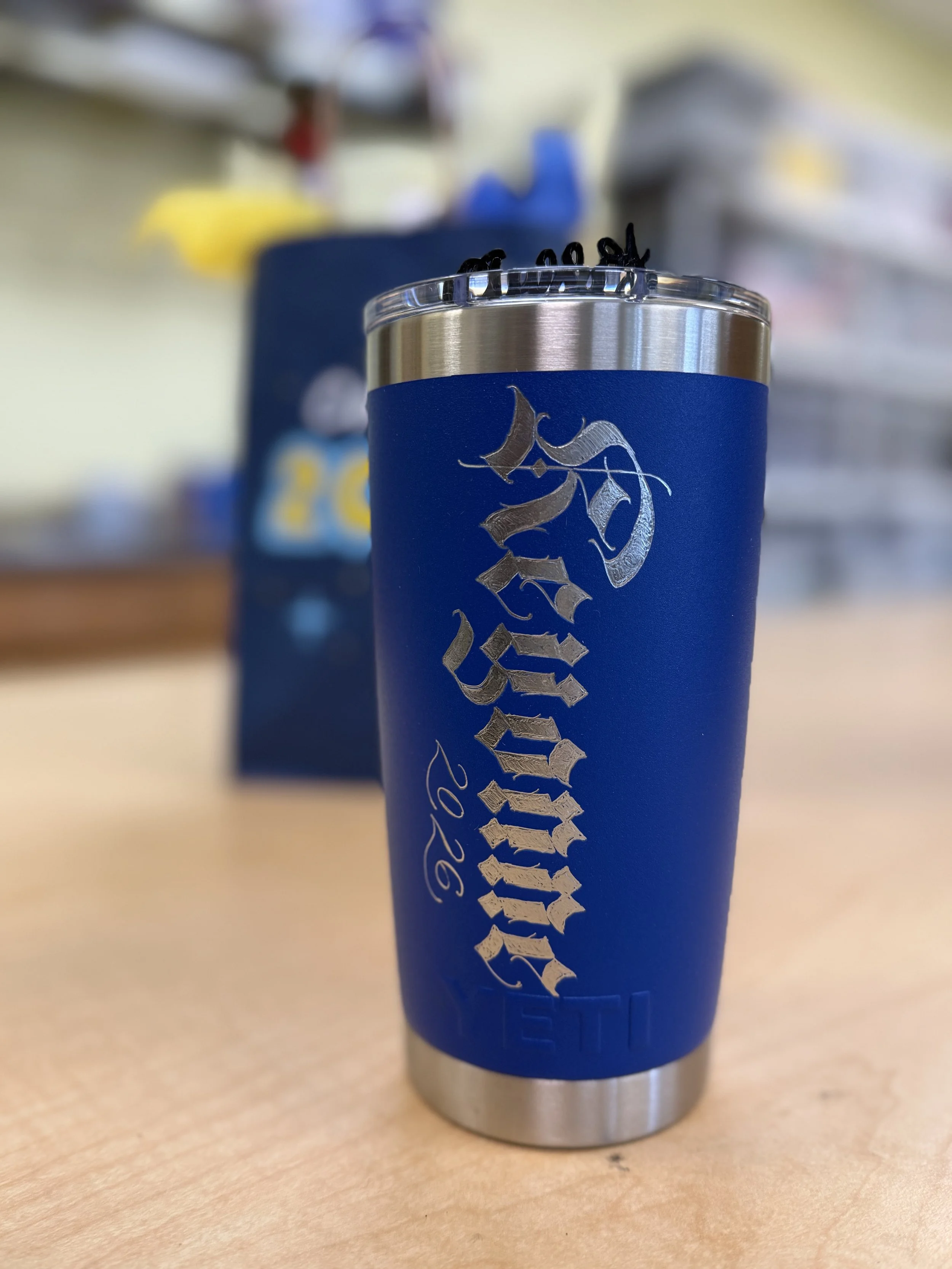
And before I knew it, something I had initially returned to because of a potential job had become a regular part of my creative practice.
I immersed myself in it because I genuinely loved it.
But from a business perspective, I also understood why it was important to know it.
And there’s something to be said about that.
I had been showing my bits and pieces of progress all along. But, only recently have I started getting questions about it.
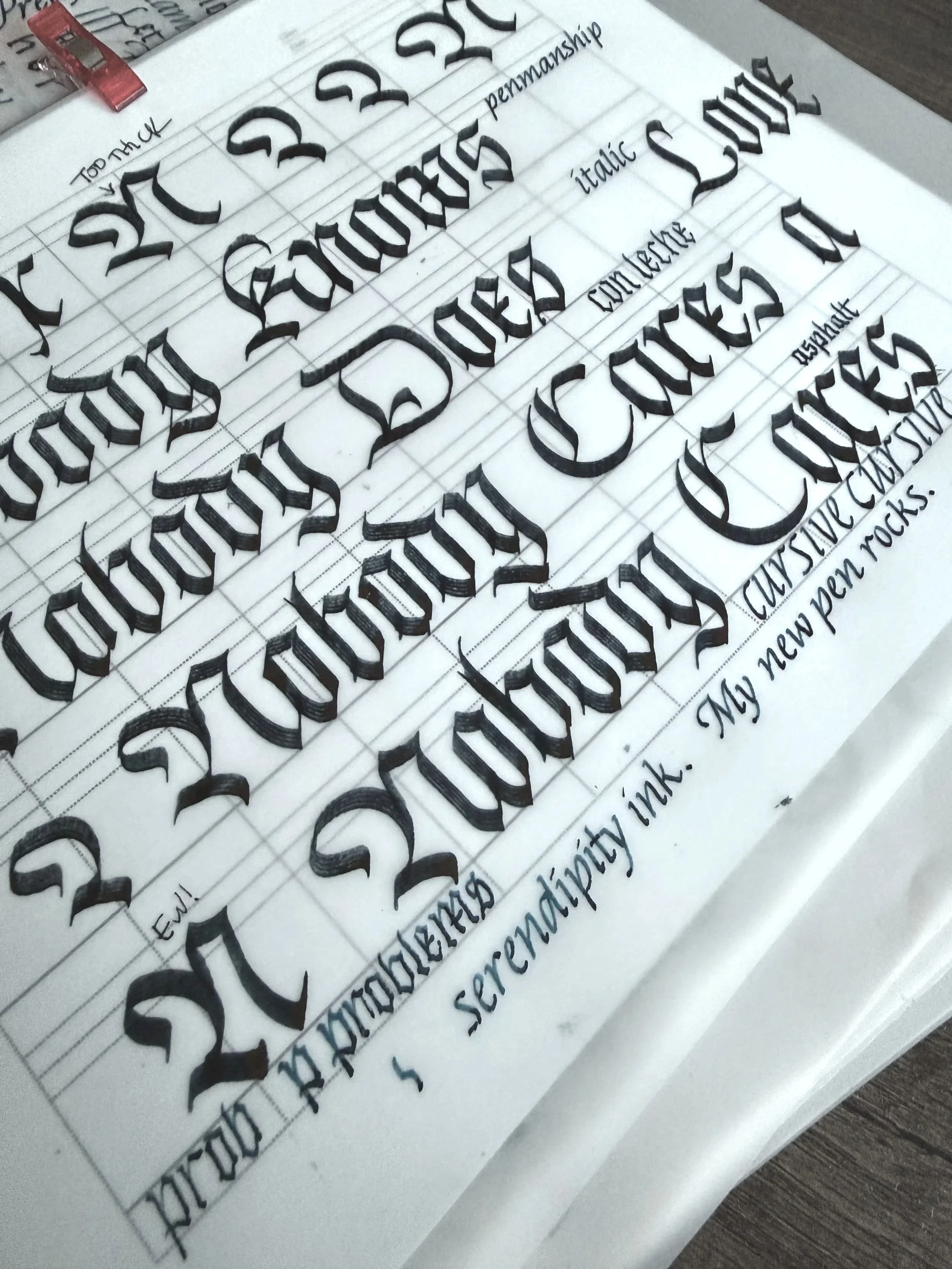
I think that’s because once I got back to it, I didn’t immediately set off to market it right away. I felt confident enough to experiment from time to time and I was proud of my progress. But, some things really aren’t meant to be rushed into mass production right away.
What I realized is that, although I wanted and still want to be as great at textura, fraktur and italic as possible, I didn't need to be a Master Penman before taking a job.
But I did need to understand these scripts well enough to produce work I could confidently put in front of a paying client.
And that brings me back to this whole debate.
Why You Should Definitely Keep Sharpening Your Skills
1. Your portfolio has to give people something worth hiring.
One of the first things prospective clients want to see is your work.
And especially when you're breaking into live events, your portfolio is often doing a whole lot of talking before you ever get the opportunity to introduce yourself.
Sure, you can learn plenty on the job. I certainly have.
But you also need a foundational skill set that allows you to create work you're proud to show.
Taking workshops, practicing new techniques, and refining the ones you already know give you opportunities to develop that work before the pressure of performing in front of an audience.
And not every portfolio piece has to come from a paid event.
Sometimes, the work that opens the door to your next opportunity is something you created at your kitchen table. Ask me how I know.
2. Practice helps you stand behind your pricing.
Let's talk about confidence for a minute.
We hear a lot about knowing our worth, charging appropriately, and not apologizing for our rates.
And rightfully so.
But there's another kind of confidence that comes from knowing you've put in the work.
When you've spent your time and even dollars investing in worksheets, workshops, filling notebooks, trying to get that elephant's trunk just right, or figuring out the difference between a majuscule A, U, and V, something starts to change.
You begin to trust your ability.
Now, does that mean practicing automatically teaches you how to price your services or run a profitable business?
Of course not.
Those are skills you have to develop, too.
But when you understand the work behind what you're offering, it's easier to communicate its value.
And when you fix your face to ask for your rate, you're a whole lot less likely to flinch, whether the person on the receiving end accepts it or not.
Because you know what went into getting you there.
3. The craft deserves our respect, too.
Somebody is going to be mad when I say this. 👀
But here goes.
Calligraphy has a rich history. The letterforms, the tools, the techniques, the traditions. None of this appeared overnight.
And while live events have introduced exciting new ways for us to share these skills, I don't believe the commercial side should completely overshadow the craftsmanship.
If you're asking others to respect the practice enough to hire and pay you to do it for them and their guests, then have enough respect for the craft to genuinely pursue it. ~Me
There. I said it.
Now, does that mean everyone needs to become a historical lettering expert or spend years studying every script?
Absolutely not.
But I do believe that when we choose to make a living from a craft, we take on some responsibility for how we represent it.
And that means being willing to learn, to practice, to ask questions, to understand the techniques we're using, and to care about the quality of what we're putting into the world.
Because we're not just providing a service.
We're also representing a craft that existed long before we came along and, hopefully, will continue to thrive long after we're gone.
So, Should You Be Practicing or Pursuing Gigs?
My answer? Both.
I don't think you should hide behind another workshop because you're afraid to send the email, pitch the brand, or make the phone call.
But I also don't think you should abandon your development as an artist because someone convinced you that time spent practicing is time you could have spent making money.
There's room for both.
And sometimes, the skills you're working on today are the very ones that will prepare you for an opportunity you haven't even imagined yet.
That blackletter certificate job never materialized for me.
But here I am, years later, still practicing the script it inspired me to revisit. Not because someone is paying me to do it, or because I have a particular gig in mind.
But because I love it. And because I believe the time I spend getting better at what I do is time well spent.
So while this debate will probably continue in the live event community long after I've hung up my pens, I wanted to share my perspective for anyone questioning whether their practice is worth the time.
It is.
And I promise you, many of those artists whose work you swoon over, the ones who've built lasting careers and whose craftsmanship makes you stop scrolling, haven't stopped learning just because they started getting booked.
They're still studying. Still experimenting. Still making mistakes and figuring things out.
And so should you.
Book the gigs. Build the business. Make the connections.
But please, don't stop being a student of your craft.
Because you can be serious about building your business without becoming less serious about your art.
While I’m not showing the pretty things I normally do, I still hope this post looked as raw as I believe behind-the-scenes practice should be.
And, I’m curious…If you're a fellow live event artist, how do you balance developing your skills with growing your business?
And whether you agree or disagree, email or DM me. I'd love to hear your take.